CUSTOMER SUPPORT
087 711 5767
087 711 5767

Pantone's colour of the year for 2026 is Cloud Dancer, a soft, lofty off-white, and it's a genuinely useful signal for what's happening in interiors more broadly. The design world is moving away from stark, glossy, clinical minimalism toward something matte, tactile, and warm-toned. Warm minimalism is the lighting expression of exactly that shift: clean lines that never tip into cold.
Our warm minimalism collection already covers the basics of what the style is and how it differs from Scandinavian design. This article goes a layer deeper, into how to actually apply it in a room, and into the comparison that matters most and gets asked least: how warm minimalism differs from Japandi, a style it's easily confused with but genuinely isn't.
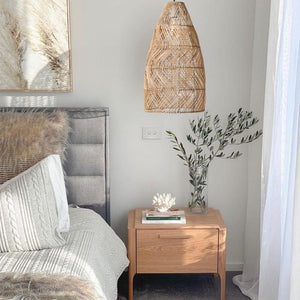
Japandi is a specific cultural fusion: Japanese wabi-sabi meeting Scandinavian hygge, expressed through particular materials and a particular philosophy. Our Japandi lighting guide sets out the six rules that define it, always 2700K, diffused light, natural materials, layered and low, dimmable, and intentional restraint, all rooted in a specific design lineage with specific cultural references.
Warm minimalism doesn't carry that lineage. It's minimalism generally, warmed up, without being tied to any particular cultural fusion or material philosophy. Where Japandi insists on rattan, cane, and specifically natural fibres, warm minimalism is happy to use matte metal, alabaster, marble, or linen, whatever delivers the soft, tonal, uncluttered result. It's the broader, more flexible category. Japandi is one particular, tightly defined way of arriving at warmth through minimalism. Warm minimalism is the wider genre that Japandi sits inside, rather than a synonym for it.
In most style categories, lighting is one ingredient among several, furniture, textiles, colour palette, and light all working together. Warm minimalism is different: the quality of the light itself is the style's defining feature, more so than almost any other category we cover.
Diffused, low-contrast, golden-toned light is what makes a pared-back room read as warm rather than sterile. Take the same clean-lined, uncluttered room and light it with a cool, harsh downlight instead, and the whole effect collapses into exactly the clinical starkness this style is built to avoid. This is why colour temperature matters more here than almost anywhere else on the site.
If the Japandi post established 2700K as the site's house reference point for warmth, warm minimalism pushes that range slightly further: 2200K to 2700K, with a clear preference for staying at or below 2700K rather than treating it as an upper limit.
The reason is specific to this style's materials. Warm minimalism leans on matte and textured finishes, travertine, alabaster, linen, brushed or soft-toned metal, and cooler light flattens exactly the qualities that make those materials work. A cool white bulb strips the warmth out of a matte alabaster wall light and makes it look closer to plain grey plaster than the tactile, soft material it actually is. Warm light is what lets the texture and tonal quality of the materials actually read the way they're meant to.
A single bright overhead fitting is the fastest way to undo everything warm minimalism is trying to do, since it flattens a room into one even, shadowless wash of light rather than the soft, considered layering the style depends on.
Layer instead: a table lamp with a linen or fabric shade for a soft pool of light at seating height, a floor lamp on a dimmer for adjustable ambient fill, and a pendant in glass or ceramic as the room's visual anchor rather than its only light source. The Pascal Marble Disk Wall Light is a genuinely good example of the material language this style wants, a slim marble disc set against a warm metal base, adding tonal texture as a secondary light source rather than the room's main event. The Mallorca Shade Wall Light does something similar with a soft fabric shade over a simple metal body, exactly the kind of diffused, textile-softened glow the style is built around.
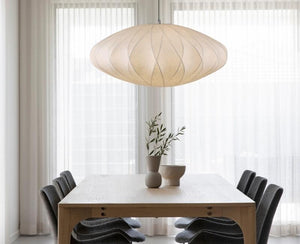
For an overhead or pendant fitting that still keeps things uncluttered, the Globe Opal Glass Ball Pendant Light diffuses light through a softly frosted shade rather than exposing a bare bulb, and comes in gold, black, or silver to match whichever metal tone is dominant in the room. The Palla Ball Pendant Light offers a similar clean, single-shape silhouette across three sizes, useful for scaling the same look up or down depending on the room.
Worth being upfront about this: warm minimalism reads as quiet luxury rather than budget minimalism. The style depends on material quality, genuine marble, well-made matte metal, proper linen, rather than on spending less. A room stripped back to very few objects only looks intentional and considered if those few objects are good ones. Fewer, better pieces is the actual brief here, not fewer, cheaper pieces, and it's worth setting that expectation honestly rather than promising an easy budget shortcut this style was never built to deliver.
That said, it integrates naturally into a lot of South African homes already leaning toward pared-back, contemporary interiors, open-plan living spaces, neutral palettes, and simple architectural lines all give warm minimalism somewhere to land without a full renovation.
What's the difference between warm minimalism and Japandi? Japandi is a specific fusion of Japanese and Scandinavian design principles, tied to particular materials like rattan and cane and a defined set of rules. Warm minimalism is the broader category, minimalism generally, warmed up, without being tied to that specific cultural lineage or material list.
What colour temperature works best for a warm minimalist room? Stay in the 2200K to 2700K range. Cooler light flattens the matte, tactile materials, alabaster, travertine, linen, that the style depends on to read as warm rather than stark.
Do I need to replace all my lighting to get this look, or can I layer it in? Layering works well. Start with one new piece, a table lamp with a linen shade or a glass pendant, and build outward from there rather than replacing every fitting in a room at once. The warmth comes from the light quality and material choices working together, which can be introduced gradually.
Browse the full warm minimalism lighting collection at Lighting.co.za for pendants, wall lights, and lamps built around soft tonal finishes and uncluttered design. Nationwide delivery is available across South Africa.