CUSTOMER SUPPORT
087 711 5767
087 711 5767

Two shops. Same product, same price point, side by side. One feels considered and premium. The other feels flat — like the stockroom got a coat of paint. The product is identical. The difference, almost always, is the lighting.
This is a practical guide to retail store lighting in South Africa: what to buy, how to layer it, and why it directly affects how much your customers spend. Whether you're fitting out a new boutique in Woodstock, refreshing a mall unit, or relighting a hardware store, the principles below apply.
Before the product picks, the business case:
Most South African retailers run one layer — ambient overhead — and wonder why the store feels flat. Good retail lighting uses three:
1. Ambient (base layer) General light for safe, comfortable movement through the space. Aim for 300–500 lux via recessed downlights. Colour temperature depends on category: 2700K–3000K (warm) for fashion, homeware and gift retail; 3500K–4000K (neutral) for hardware and electrical, where colour accuracy and visibility matter more than atmosphere.
2. Accent (the selling layer) Directional track spotlights or adjustable spotlights aimed at specific products or displays. This is where retail lighting actually sells. Target a contrast ratio of 3:1 to 5:1 against your ambient level — if your ambient is 300 lux, accent spots should hit 900–1,500 lux on the product surface.
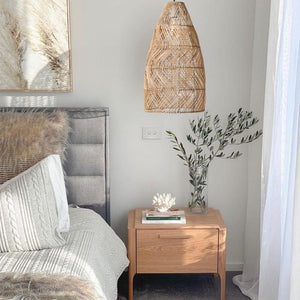
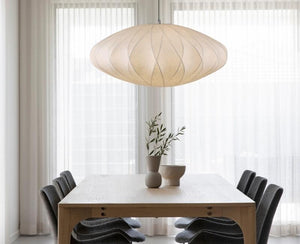
3. Decorative / brand (the identity layer) A statement fitting that signals brand personality — a pendant light over the till, warm Edison-style bulbs over a display table. It doesn't need to light much; it needs to look intentional.
| Retail category | Recommended colour temp | Why |
|---|---|---|
| Fashion & clothing | 2700K–3000K | Flattering on skin and fabric colour |
| Jewellery & accessories | 3000K–3500K | Warm but accurate on gold/silver |
| Food & grocery | 3000K–3500K | Makes food look fresh |
| Homeware & décor | 2700K–3000K | Mirrors how it'll look in-home |
| Art & craft | 3500K–4000K, CRI 95+ | Accurate colour is non-negotiable |
| Hardware & tools | 3500K–4000K | Visibility over atmosphere |
| Pharmacy | 4000K–5000K | Clinical clarity builds trust |
| Electronics | 4000K | Reads as precise and high-tech |
Mixed-category store? Default to 3000K with CRI 90+ — the most broadly flattering warm option.
CRI (Colour Rendering Index) shows how accurately a light source renders colour versus daylight (CRI 100). Standard hardware-store LEDs sit at CRI 70–80 — colours look flattened or shifted. A CRI-75 clothing boutique is quietly costing itself returns: the red dress looks orange, the customer buys it, sees it in daylight, and brings it back.
Spec rule of thumb: all accent/display lighting at CRI 90+ minimum; ambient fill at CRI 80+; jewellery, art and colour-critical product at CRI 95+.
Track lighting is a surface-mounted rail with adjustable spotlight heads, and it's the backbone of good retail lighting because it's:
Finish tip: black for industrial/modern, gold for boutique/luxury, white for clean/minimal.
Your shop window converts passers-by before they've set foot inside — yet it's consistently under-lit in SA retail. Fix it with multiple small directional spots (not one big one) aimed precisely at hero products, at a warmer temperature than the rest of the store (2700K), plus an LED strip along the window base for depth.
At the entrance, outdoor wall lights flanking the door signal permanence and professionalism — a bare bulkhead fitting reads as low-margin. Match the interior's warm 2700K–3000K so the transition from street to store feels like an arrival, not a threshold.
| Zone | Fitting | Spec |
|---|---|---|
| General ambient | Recessed downlight | 7–10W, 3000K, CRI 85+, dimmable, ~1.5m grid |
| Product display | Adjustable track spot | 7W, 3000K, CRI 90+, anti-glare |
| Window display | Track spot, compact rail | 7W, 2700K, CRI 90+ |
| Till/counter | Adjustable spotlight | 7W, 3000K, CRI 90+ |
| Brand/decorative | Statement pendant | 2700K, E27, 1–2 units |
| Entrance exterior | Outdoor wall light | 3000K, IP44, E27 |
Browse the full ranges: Track Lights · Spot Lights · Down Lights · LED Profile Lighting · Pendant Lights · Outdoor Wall Lights · Kinetic Wireless Switches
Note: GU10 track spotlights and multi-head spotlights require a compatible GU10 LED bulb, sold separately — shop bulbs here.
Fitting out more than one location, or buying in volume? See our Lighting Trade Programme for commercial and bulk pricing.
What is the best lighting for a retail store? A three-layer system: ambient downlights for base illumination, adjustable track or spotlights for product accent (3:1–5:1 contrast over ambient), and one decorative fitting for brand identity.
What colour temperature should a shop use? 2700K–3000K (warm) for fashion, homeware and gift retail; 3500K–4000K (neutral-cool) for hardware, tools and pharmacy where accuracy matters more than atmosphere.
Why does CRI matter for retail lighting? CRI (Colour Rendering Index) measures how accurately a light source shows true colour. Low-CRI lighting (below 80) distorts how products look, which is a common — and avoidable — driver of returns in clothing and homeware retail. Use CRI 90+ for display lighting.
Is track lighting good for shops? Yes — it's the standard commercial choice because heads can be repositioned without an electrician as displays and seasonal layouts change, and it scales from a small boutique to a large-format store.
A R15,000 lighting upgrade in a store turning over R500,000 a month isn't a décor line item — it's a sales tool. Lighting.co.za stocks everything a South African retail fit-out needs, from track rails and GU10 spotlights to statement pendants, with nationwide delivery. Get the layering, the colour temperature and the CRI right, and the lighting starts working for you every hour the doors are open.