

Walk into a restaurant that's won every design award going, and you'll sometimes find the same problem: the food photographs beautifully, but you can't read the menu, the waitstaff are bumping into each other in the dark, and by nine o'clock the room feels less intimate than oppressive. Walk into the restaurant next door and you'll find the opposite fault — perfectly practical, perfectly lit, and about as romantic as a staff canteen.
Both are lighting failures, and both come from the same mistake: treating restaurant lighting as one decision instead of several. A dining room, a bar, a kitchen pass, an entrance, and a toilet are five different lighting problems wearing one building. Solve them separately and the whole space works. Solve them with a single ceiling grid of downlights and you'll spend years wondering why the room never quite feels right.
Why restaurant lighting is a three-way brief
Every restaurant lighting decision is answering to three separate demands, and they don't naturally agree with each other.
Atmosphere
Makes diners feel relaxed, flattered, and inclined to stay for another course or another bottle. Warm — 2700K to 3000K — low-level, and built from pendants, wall sconces, table lamps and dimmable downlights rather than one bright source overhead.
Function
Lets staff move safely, read handwritten dockets, plate food accurately and work the floor without incident. Service paths and till points need real light even while the dining room itself stays dim.
Brand
The visual identity of the room. A fine dining venue, a casual bistro, a wine bar and a family steakhouse should never share the same lighting plan — the fittings are as much décor as they are light sources.
Most SA restaurant lighting problems trace back to a fit-out that optimised for one of these three and assumed the other two would sort themselves out. They don't.
The five zones every restaurant needs to light differently
Rather than lighting a restaurant as one continuous space, break it into zones and give each one its own colour temperature, light level and fittings.
Zone 1 — Dining tables, the money zone
This is where the meal happens, so atmosphere leads. Warm light makes food look richer, wine look deeper, and diners look better — which is not a trivial point in a room full of people on dates and work dinners. Pendant lights hung 700mm–900mm above the table, a chandelier as a central anchor, and dimmable downlights as fill will do the job. Dimmability isn't optional here: a restaurant that can't shift from bright lunch trade to low, intimate dinner lighting is leaving evening revenue on the table.
Zone 2 — Bar and drinks counter
The bar should draw the eye — it's usually the brightest visual anchor in the room. Pendant lights over the bar top, adjustable spotlights aimed at the bottle display, and warm LED strip backlighting the glass shelving turn a row of bottles into a feature wall. Backlit shelving is, fitting for fitting, the single highest-impact investment behind most SA bars.
Zone 3 — Kitchen pass and service paths
The transition zone between kitchen and floor needs to be brighter and slightly cooler than the dining room, so staff can check a plate before it goes out. Recessed downlights or track spots aimed squarely at the pass — and out of the diner's eyeline — are enough.
Zone 4 — Entrance and reception
First impressions happen here. A statement pendant cluster or chandelier sets the tone the moment a guest steps in, wall sconces add flanking warmth, and an outdoor wall light at the door gives arriving guests a well-lit, welcoming threshold before they've even sat down.
Zone 5 — Toilets
Ignored constantly, noticed instantly. An elegant restaurant with a fluorescent-lit bathroom breaks its own spell in seconds. Vanity wall lights at face height either side of the mirror — never overhead — keep the lighting flattering rather than clinical.
Colour temperature: the one decision that defines the room
If there's a single specification that separates a restaurant that feels considered from one that doesn't, it's colour temperature — and it's also the most commonly misunderstood spec on a lighting order.
| Colour temperature | Best for | Watch out for |
|---|---|---|
| 2700K (very warm) | Fine dining, romantic restaurants | Can feel oppressive without enough fill light |
| 3000K (warm white) | The SA sweet spot — works lunch through dinner | None — the safest default for most venues |
| 3500K–4000K (neutral) | Food halls, fast-casual | Accurate but not appetising — use sparingly |
| 4000K+ (cool white) | Kitchens only | Avoid entirely in any seated dining area |
For a mixed-use SA venue running lunch meetings through to date-night dinners, 3000K fittings on a good dimmer circuit give the most flexibility without a second lighting scheme.
The case for dimmable lighting — and where SA restaurants get it wrong
Dimming isn't a finishing touch; it's the mechanism that lets one dining room do the work of two, moving from bright lunch service to low dinner lighting without touching a single fitting.
The common failure isn't skipping dimmers — it's pairing dimmable fittings with the wrong dimmer switch, or fitting non-dimmable LEDs behind a dimmer control. The result is flicker, a barely-there dimming range, or an audible buzz, all of which are worse than no dimmer at all. Getting it right means specifying LED fittings with dimmable drivers (not just a dimmable bulb), LED-compatible dimmer switches rather than old trailing-edge dimmers built for incandescent bulbs, and separate dimmer circuits for the dining floor, bar and entrance so they don't all move together.
For leased premises: many SA restaurants operate in leased mall or high-street units where rewiring isn't permitted. Kinetic wireless switches add independent zone control to an existing fit-out without opening a single wall.
Statement fittings: how to use them without turning the room into a showroom
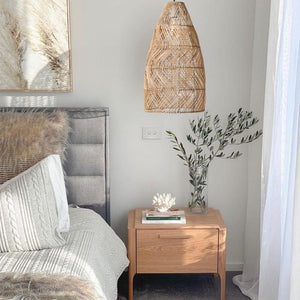
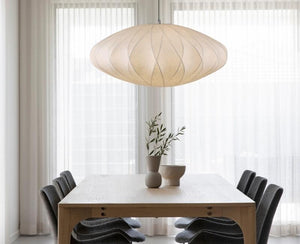
A restaurant's pendants and chandeliers are the first thing a diner photographs. They carry real branding weight — but they're a secondary light source, not the room's main job.
- Pendants over tables: 700mm–900mm above the table surface. For long communal tables, a run of smaller pendants at close spacing reads better than one oversized fitting.
- Chandeliers as focal points: best in entrances, over the bar, or in a private dining room — in a large open floor they can look undersized unless clustered or genuinely large.
- Wall sconces for warmth: mounted at seated eye level, around 1.4m–1.6m, they add horizontal warmth without the overhead glare a downlight-only room suffers from.
- Rechargeable table lamps: a cordless, candle-like glow at the table without the fire risk or wax mess of real candles. They run 6–8 hours per charge and move freely between tables or outside — increasingly common in upper-end SA restaurants.
Outdoor dining: a year-round priority in SA
South Africa's climate keeps outdoor dining relevant most of the year, and outdoor zones need their own treatment rather than a single bulkhead light at the door.
- IP ratings matter: IP44 minimum for any outdoor fitting; IP65 for anything exposed to direct rain.
- Warm needs help outdoors: without walls to bounce light around, warm-toned fittings need a higher lumen output than the indoor equivalent to read as warm at all.
- String lights and festoon: great for atmosphere in a courtyard, but layer them over a base of downlights or wall sconces rather than relying on them alone.
- Outdoor wall lights at eye level: the most overlooked outdoor fitting. At 1.4m–1.6m on boundary walls, they create depth that downlights alone can't.
A worked lighting spec for an 80-seat SA restaurant
Illustrative, not a formal quote — but a real starting point for a fit-out conversation.
| Zone | Fitting | Spec |
|---|---|---|
| Dining tables | Pendant / cluster | 2700K–3000K, dimmable, 700–900mm above table |
| Dining floor fill | Dimmable downlight | 2700K, CRI 85+, separate dim circuit |
| Bar top | Pendant lights | 2700K–3000K, 700–800mm above bar |
| Bottle display | Backlit LED strip | 3000K, CRI 85+, behind glass shelving |
| Entrance | Statement pendant / chandelier | 2700K–3000K |
| Dining perimeter | Wall sconce | 2700K, mounted 1.4–1.6m |
| Kitchen pass | Recessed downlight / track | 3000K–3500K, separate switch |
| Outdoor dining | Outdoor wall light + downlights | 2700K, IP44 minimum |
| Toilets | Vanity wall light ×2 per mirror | 3000K, CRI 85+ |
| Tables (optional) | Rechargeable table lamp | 2700K, cordless, 6–8hr run time |
Five restaurant lighting mistakes SA owners make
- One colour temperature everywhere — function zones and atmosphere zones need different warmth levels, not the same one throughout.
- No dimmers, or the wrong dimmers — the single most fixable failure. Without them, one lighting setting has to work for every service.
- Overhead-only lighting — pendants and downlights with no wall sconces or table lamps leave diners feeling exposed rather than comfortable.
- An unlit bar back — the bottle display is one of the most photographed spots in the restaurant; leaving it dark is a missed opportunity, not a saving.
- Forgetting the outdoor area — a courtyard on one bulkhead light loses exactly the experience SA's climate is built for.
Several fittings recommended below — including the Zoom and Zen spotlights — are GU10 lamp-holder fittings and require a compatible GU10 LED bulb, sold separately. Shop GU10 bulbs.
Product picks for a restaurant fit-out
Real fittings from the Lighting.co.za catalogue, organised by the zone they belong to.
Frequently asked questions
What colour temperature is best for restaurant lighting in South Africa?
Most SA restaurants work best on 2700K–3000K warm white for the dining floor, bar and entrance. This range flatters skin tones and food while staying bright enough for service. Reserve 3000K–3500K for the kitchen pass and toilets, and avoid anything above 4000K in a seated dining area.
How high should pendant lights hang above a restaurant table?
700mm to 900mm above the table surface. Lower feels intrusive to seated guests; higher loses the intimacy the fitting is meant to create.
Do restaurant lights need to be dimmable?
In almost every case, yes. A restaurant running bright lunch and intimate dinner service off fixed-output lighting is losing evening revenue. Pair dimmable-driver fittings with LED-compatible dimmer switches — not a dimmable bulb behind a standard switch.
What lighting do I need for a restaurant bar area?
Warm pendant lighting over the bar top, adjustable spotlights aimed at the bottle display, and backlit glass shelving with warm white LED strip. Backlighting the bottle display is one of the highest-impact, lowest-cost bar upgrades available.
Can I add lighting zones to a restaurant without rewiring?
Yes. Kinetic wireless switches add independent dimming control to a dining floor, bar, or entrance zone without opening walls or running new cable — useful in leased premises where rewiring isn't permitted.
Fitting out a restaurant?
From dining pendants to bar backlighting and dimmable downlights, our Trade Programme supports commercial orders at scale. Get in touch for a quote.
Explore the Trade Programme →


