CUSTOMER SUPPORT
087 711 5767
087 711 5767

An indoor braai room is simultaneously the most social, most atmospheric, most visually dramatic room in the house — and one of the hardest to light well. The fire itself is light, which makes the whole thing feel self-sufficient until you try to check whether the chops are done at 9pm and realise the only illumination is the glow of the coals.
This is a zone-by-zone guide to lighting an indoor braai room correctly — from the cooking zone to the seating area to the features that make a braai room memorable when the fire is burning low and the guests are still talking.
Most homeowners think of their braai room as one space. It's actually four, each with different requirements:
Zone 1 — The braai and cooking zone. Where the built-in braai, grid and firebox live. Needs focused task light for safe cooking, without fittings in the direct smoke path. IP54 minimum on all fittings, light from the side, never from directly above.
Zone 2 — The prep and counter area. Where meat is prepared, tools are stored, drinks are poured. Needs practical task light, much like a kitchen counter. Under-counter LED strip or a directed overhead spot. IP54 minimum, IP65 if the counter gets wet.
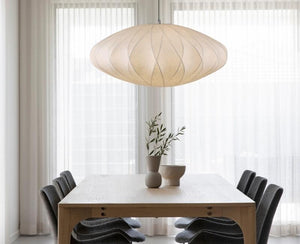
Zone 3 — The seating and social area. Where guests sit, watching the fire and each other. Needs warm, atmospheric, dimmable light at 2700K–3000K. Pendant lights, wall sconces and rechargeable table lamps are the heroes here.
Zone 4 — Feature walls and architectural details. Brick, stone, timber or concrete, lit with directional up/down wall lights or track spots, create the visual drama that makes a braai room feel designed rather than functional — the layer most SA braai rooms are missing.
The offset rule — the single most important thing in this article: never position a light fitting directly above the braai in the smoke column. It will be damaged by heat and grease, and when the braai is lit, the smoke path creates glare and a visible distortion between the fitting and the cooking surface.
Instead:
Colour temperature: 3000K–4000K. Warm enough not to feel clinical, cool enough to assess meat colour accurately — under very warm light (2700K), pinks look more pronounced, which matters when judging doneness.
IP rating: IP54 minimum for all fittings within 1.5m of the braai; IP65 preferred for anything exposed to splashing or cleaning.
Some homeowners want a light inside or immediately adjacent to the firebox — technically possible with oven-type lamps and heat-resistant silicone cable, but overkill for most built-in braais. A focused wall light at cooking height on the side wall does the job more safely and more practically.
Treat this exactly like a kitchen counter zone:
Colour temperature for prep: 3500K–4000K — neutral enough for accurate food assessment, practical for working in.
This is where the braai room becomes a living space, and where most SA braai rooms underperform. A single overhead bulkhead fitting — or a leftover utility light from the room's previous life — leaves the seating area cold no matter how good the food is.
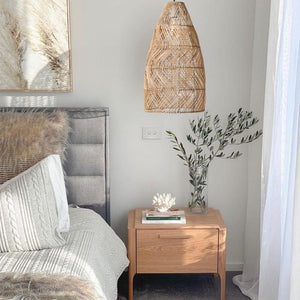
Pendant lights above the seating area, hung 700–900mm above a central coffee table or low seating island, create visual warmth and intimacy. In a braai room with exposed brick, timber, or thatch, a woven rattan or natural fibre pendant diffuses light beautifully and references the organic materials around it; industrial metal pendants work in more contemporary braai rooms.
Wall sconces on the perimeter walls, spaced 1.8–2.5m apart at 1.4–1.6m from the floor (eye-level for a seated guest), outputting warm 2700K light. Up/down wall fittings work particularly well — they illuminate the ceiling (bounced warmth) and the wall texture below simultaneously.
Rechargeable table lamps on side tables or a coffee table are the most flexible option: no wiring, position anywhere, charge between sessions. A rechargeable lamp at coffee table height adds a warm glow at exactly the right level for a seated guest, and signals that this space was designed, not just built.
Colour temperature: 2700K–3000K — the seating area should feel noticeably warmer and more intimate than the cooking zone, mirroring how a restaurant zones its kitchen and dining spaces.
Dimmability: seating area lights should be dimmable so, as the fire burns lower and guests settle in, the ambient level can come down and let the fire itself become the dominant light source. This transition is what makes a braai room feel magical rather than merely functional.
The most overlooked layer, and the one that most dramatically transforms a braai room from "built" to "designed." SA braai rooms are defined by their materials — exposed brick, face brick, stacked stone, timber, concrete screed, and thatch all look spectacular when side-lit by directional light that grazes across their texture, and flat and unremarkable under overhead diffuse light.
The chimney breast as a feature: most SA built-in braais have a chimney breast rising above the firebox. An adjustable spot aimed upward at it, or a pair of wall sconces on the flanking walls directing light inward, transforms the chimney from a functional element into the visual centrepiece of the room.
A braai room with a burning fire has its own light source that changes through the evening. The artificial lighting design should acknowledge this:
This progression is what separates a braai room that just has lights from one that uses lighting intentionally. Dimmable fittings and separate zone switching — via kinetic wireless switches where rewiring isn't practical — make it possible.
| Zone | Fitting type | Spec | IP rating |
|---|---|---|---|
| Braai cooking surface | Adjustable wall light or track spot (offset from smoke path) | 7–12W, 3000K–4000K | IP54 min |
| Prep/counter area | Under-counter LED strip | 3000K–3500K | IP65 |
| Counter overhead | Adjustable track spot | 7W, 3500K–4000K | IP54 |
| Seating area overhead | Pendant or cluster | 2700K–3000K, dimmable | IP20+ (enclosed) / IP44 (open) |
| Seating perimeter | Wall sconces × 2–4 | 2700K, E27 or GU10 | IP44 min |
| Coffee/side table | Rechargeable table lamp | 2700K, portable | N/A |
| Feature wall | Up/down wall light or directed track spot | 2700K–3000K | IP44 |
| Under-shelf/cove | LED strip | 2700K | IP65 |
Wall lights (cooking zone, seating perimeter, feature wall) — the workhorse fittings in a braai room: IP-rated, easy-clean, warm-toned.
Browse: Outdoor Wall Lights
Pendants (seating area — the atmospheric anchor) — robust, easy-clean, warm-toned. Reserve fabric shades for the seating area only; avoid them in the cooking zone.
Browse: Pendant Lights · Outdoor Pendant Lights
Track lighting (cooking offset, counter, feature wall) — the most flexible overhead solution; adjustable spots can be directed at any zone without sitting in the smoke column.
Browse: Track Lights
Downlights (ambient fill for fully enclosed braai rooms)
Browse: Down Lights
LED strip (under-counter, under-shelf, cove)
Browse: LED Linear Profile Lights
Rechargeable table lamps (seating area — cordless, portable, fire-adjacent) — no wiring to the coffee table, charge between sessions, position anywhere.
Browse: Rechargeable Lights
Zone control without rewiring — independently dimming and switching the cooking zone, seating zone, and feature wall is what enables the evening lighting progression. If the braai room doesn't have separate circuits, kinetic wireless switches allow zone control without electrical modification.
Note: track spotlights and some downlights are GU10 lamp-holder fittings — bulb sold separately. Shop bulbs here. Any wiring within about 40cm of the firebox requires heat-resistant silicone cable, and any new circuits require a qualified electrician — this is not a DIY wiring job near the braai.
Can you put a light directly above a braai?
No. A fitting mounted in the smoke column will be heat-damaged, grease-stained, and creates glare that bounces smoke back into the cook's eyes. Offset overhead fittings 400–600mm back, or use side-mounted wall lights instead.
What IP rating do braai room lights need?
IP54 minimum within 1.5m of the braai, and ideally throughout the room given the smoke and grease exposure. IP65 is preferred for anything that may be splashed or needs regular cleaning.
What colour temperature is best for a braai room?
3000K–4000K over the cooking and prep zones for accurate food assessment, and 2700K–3000K in the seating area for a warm, atmospheric feel. The contrast between the two zones is intentional.
How do you light a braai room feature wall?
Use directional track spots or up/down wall lights angled at roughly 30–45° to graze across brick, stone or timber texture. This creates dramatic contrast that flat overhead light can't achieve.
A braai room that's lit well works at every stage of the night — bright when you're setting up, focused when you're cooking, warm when the guests are settled, and intimate when the fire is low. Getting there doesn't require a full rewire or a designer budget; it requires thinking about the room in zones, choosing the right IP rating for each position, and adding the layers most braai rooms are missing. Shop outdoor wall lights, outdoor pendants, track lights, downlights, LED strip, and rechargeable lamps at Lighting.co.za, with nationwide delivery.