CUSTOMER SUPPORT
087 711 5767
087 711 5767

A guest’s impression of a hotel is substantially formed in the first 90 seconds after they walk through the door. Before the room is seen, before the bed is felt, before the shower pressure is assessed — the lobby has already done its work. Lighting is the primary instrument through which a lobby communicates luxury, warmth, and professionalism, or the lack of any of these.
This is a practical guide to hotel lobby lighting in South Africa, from the statement fitting overhead to the wall sconce at the concierge desk.
Most commercial spaces have one primary function. A lobby has at least five, all at once:
These five functions cannot be served by a single overhead fitting. A layered approach isn’t a luxury — it’s a technical requirement for a lobby that actually works.
Layer 1 — The statement overhead (brand anchor)
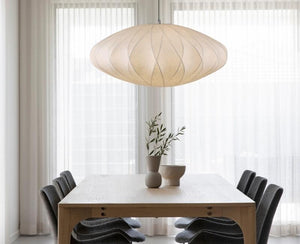
The chandelier, cluster pendant, or sculptural installation that announces the hotel’s identity the moment a guest looks up. Its job is visual presence, not functional light. Scale it to ceiling height — a double-volume lobby wants a large cluster pendant or multi-tier chandelier, while a standard-height lobby suits a single large-diameter pendant or a composed group of smaller pendants. Colour temperature: 2700K–3000K, always — cool white on a statement fitting reads as institutional. Put it on its own dimmable circuit so intensity can shift between check-in rush and late-night quiet.
Layer 2 — Ambient fill (the working layer)
The base level allowing safe movement and reception tasks, via recessed downlights on a separate, dimmable circuit from the statement overhead. Colour temperature 2700K–3000K to match. Target 150–200 lux for general circulation, 250–300 lux at the reception desk. Avoid flat LED panels — they flatten the space; use recessed or semi-recessed downlights instead.
Layer 3 — Wall and perimeter lighting (the depth layer)
The layer most consistently missing in SA hotel lobbies. Without it, a space looks like a lit box; with it, walls glow and the architecture reads. Mount wall sconces at 1.6–1.8m — roughly eye level for a seated guest — in pairs or runs along corridor walls, behind reception, and flanking artwork. Slim LED linear wall lights create vertical light washes that add height and drama in contemporary lobbies.
Layer 4 — Accent and feature lighting (the detail layer)
Directional spotlights or track lighting aimed at artwork, a feature wall, or a reception desk detail. Use adjustable track spots or tight-beam ceiling spotlights (15°–25°). CRI 90+ is essential so features are seen accurately, at 3000K–3500K — slightly cooler than ambient, for crisp accent light.
A lobby is the first lit environment a guest encounters after arriving from outside. Arrive in daylight and walk into a 4000K neutral-white lobby, and the space feels cold and transitional — it doesn’t feel like arrival. Arrive in the evening to a 2700K warm lobby, and the contrast creates an immediate sense of welcome.
The hospitality standard: 2700K–3000K for all primary lobby lighting — statement overhead, ambient fill, wall sconces. The only exception is accent lighting on artwork or display features, at 3000K–3500K with CRI 90+.
The common SA mistake: installing 4000K cool-white downlights simply because they’re the default fitting from an electrical wholesaler. The result reads like a corporate office reception. The product cost difference between 2700K and 4000K is often zero — it’s purely a specification decision, and one worth putting in writing before installation.
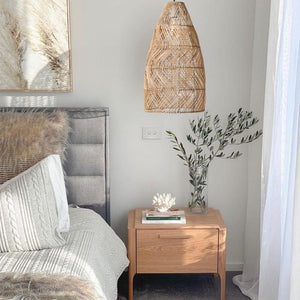
International leisure travellers arriving in SA are often seeking something distinctly African and removed from the generic international hotel experience. They respond strongly to organic materials, warm tones and natural references — woven rattan pendants, warm amber glass, stone and timber. 2700K warm light on natural materials reads as authentic; 4000K cool light on the same materials looks bleached and corporate.
Business travellers, largely in urban Joburg, Cape Town CBD, Sandton and airport hotels, value clarity and quality. Contemporary architectural lighting — linear LED pendants, clean-lined sconces, well-directed accent spots — signals professionalism without sacrificing warmth.
Domestic leisure guests, a growing post-pandemic market, are aspirational and comparing the stay to the best local and international properties they know. They photograph everything — the lobby will appear in their Instagram Stories before they’ve reached the room.
Reception desk — the operational heart of the lobby, needing the highest functional illumination (250–300 lux) without breaking the ambient atmosphere. Hang pendant lights low over the counter (700–800mm above the desk surface) for task light with elegance, or use recessed downlights precisely aimed at the desk on a separate circuit. Avoid uplighting as the primary reception light — staff faces will be poorly lit exactly where functionality matters most.
Lobby seating area / lounge corner — treat it as a miniature living room: floor lamps or table lamps, warm pendants if ceiling height allows, and wall sconces on adjacent walls. This zone should read noticeably warmer and more intimate than general circulation, with its own dimmable circuit to shift from bright daytime seating to evening cocktail atmosphere.
Lift lobby / circulation core — often neglected, despite being where guests wait and photograph. Should match the main lobby in temperature and quality even with a simplified fitting choice; wall sconces in pairs flanking the lift doors is a simple, high-impact solution.
Staircase — pendant lights descending a stair void, or wall sconces at each landing, are among the most photographed elements in a boutique hotel, and a safety requirement besides. Combine ambient step lighting for safety with decorative stair-void pendants for drama.
Exterior entrance — the lighting sequence begins before the guest enters. Outdoor wall lights flanking the door, perimeter lighting on the approach, and any facade uplighting are all part of the first impression. 2700K–3000K throughout; IP44 minimum, IP65 for exposed positions.
Illustrative framework for a mid-scale boutique or four-star hotel — not a quote.
| Zone | Fitting type | Spec | Notes |
|---|---|---|---|
| Central overhead / feature | Statement chandelier or cluster pendant | 2700K, dimmable | Scale to ceiling; dedicated circuit |
| General ambient fill | Recessed downlights | 7–10W, 2700K, CRI 85+, dimmable | Grid at 1.5m; separate circuit from overhead |
| Reception desk | Pendant over counter + downlight | 2700K, dimmable | Pendant 700–800mm above desk; downlight aimed precisely |
| Perimeter wall sconces | Wall light | 2700K, E27 or GU10 | 1.6–1.8m height; pairs or runs along feature walls |
| Artwork / feature accent | Adjustable track spot | 3000K–3500K, CRI 90+, 15°–25° beam | Tight beam; separate circuit |
| Seating / lounge area | Floor lamp + table lamp | 2700K | Layered; dimmable where possible |
| Lift lobby | Wall sconces × 2 per lift door | 2700K | Flanking each set of lift doors |
| Exterior entrance | Outdoor wall lights × 2 | 2700K–3000K, IP44 | Flanking entrance door |
| Exterior facade uplights | Ground-mounted spots | 3000K, IP65 | Optional architectural statement |
Statement overhead — chandeliers and cluster pendants (brand anchor layer)
Browse: Chandeliers · All Hanging Lights · Luxury Hotel Glam collection
Linear pendants (reception desk and bar counter)
Wall sconces (the perimeter depth layer — the most-missed layer in SA lobbies)
Browse: Indoor Wall Lights
Accent and track spotlights (detail and artwork layer)
Browse: Track Lights · Spot Lights
Lounge seating area — Floor Lamps · Table Lamps · cordless option: Button Rechargeable Table Lamp or the statement Ping Marble Rechargeable Table Lamp both from the Rechargeable Lights collection, no cabling required to coffee or side tables
Exterior entrance
Browse: Outdoor Wall Lights
Fitting out a full property? Our Lighting Trade Programme supports hotel-scale volume orders and specification assistance.
Note: GU10 track spotlights and adjustable ceiling spotlights (Zoom, Zen, Kaapstad) are GU10 lamp-holder fittings — bulb sold separately. Shop bulbs here.
What colour temperature should a hotel lobby use?
2700K–3000K for all primary lighting — statement overhead, ambient fill, and wall sconces. Reserve 3000K–3500K with CRI 90+ for accent lighting on artwork or display features only.
What is the most commonly missing layer in South African hotel lobbies?
Wall and perimeter lighting. Most lobbies have an overhead fitting and downlights but skip wall sconces, leaving the space feeling flat and boxy instead of layered and dimensional.
How many lux does a hotel reception desk need?
Around 250–300 lux at the desk surface, noticeably higher than the 150–200 lux used for general lobby circulation, achieved without breaking the overall ambient atmosphere.
Should hotel lobby lighting be dimmable?
Yes — every zone ideally on its own circuit. A lobby needs to shift from bright, functional daytime lighting to an intimate evening atmosphere, and dimming is the tool that makes that transition possible.
A hotel that invests in lobby lighting invests in every review that mentions the word “atmosphere.” Shop the Luxury Hotel Glam collection for the full brand-anchor-to-accent range, and get in touch about the Lighting Trade Programme for volume orders and specification support on larger properties.