CUSTOMER SUPPORT
087 711 5767
087 711 5767

Picture two South African café owners. The first spent serious money on a beautiful fit-out — warm timber, exposed brick, linen lampshades — but customers describe the vibe as "a bit like a school hall." The second chose gorgeous Edison filament bulbs throughout. The café looks incredible in photos. The electricity bill is R4,200 a month. Both made the same mistake: they treated lighting as decoration instead of infrastructure.
Coffee shop lighting is a three-way brief. It has to feel right (ambience that keeps customers lingering), work right (task light at the counter, readable menus, food that looks appetising), and cost right (an LED fit-out that won't add thousands to your monthly Eskom bill). This guide covers all three — practically, and specifically for South African conditions.
A café has at least three distinct zones, each with a different functional brief:
The most common mistake in South African café fit-outs is running all three zones on a single circuit at the same colour temperature. Separate switching — even if the circuits themselves can't be separated — transforms how the space functions across the day.
Colour temperature (measured in Kelvin) is the difference between a café that feels warm and alive and one that feels like a government waiting room.
Practical rule for SA café aesthetics: Exposed brick, warm timber, and raw concrete — all common in South African coffee shop design — absorb warm light beautifully. Go warmer (2700K). White plaster or tile-heavy spaces can handle slightly cooler temperatures (3000–3500K) without looking yellow.
Consider a realistic small café scenario: 20 × 50W halogen downlights running 12 hours a day generates a monthly lighting bill of roughly R990 at a commercial tariff of ~R2.75/kWh. Replace those with 7W LED equivalents and the monthly cost drops to approximately R138 — a saving of over R850/month. The LED fittings pay for themselves in under four months.
Beyond the direct saving:
Track lighting is the most versatile option for a commercial space. Spots can be redirected as layouts change, angled precisely at display cases or retail shelves, and installed on surface-mounted track — critical for lease tenants who cannot modify ceilings. Specify warm-white LED spots with CRI 90+ for any food-facing position.
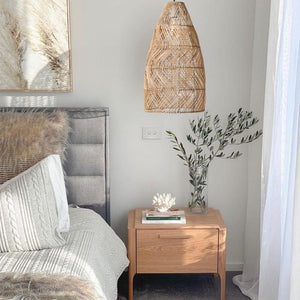
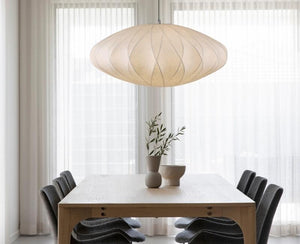
Pendant lights offer high visual impact over tables and counters. Choose IP20 minimum indoors; IP44 near a kitchen or semi-covered outdoor area. Hang at 700–800mm above the table surface. Woven, rattan, and metal finishes suit the warm aesthetic most common in SA café interiors, and look their best at 2700–3000K.
Recessed downlights and spotlights work well where the ceiling allows modification. Always specify dimmable, warm-toned LEDs — avoid generic 4000K+ office panels. For display areas, track spots give better directional control than fixed downlights.
LED strip and profile lighting works well under counters, inside display shelving, and as cornice or cove fill. It's an accent and atmosphere layer, not a primary light source. Specify warm white (2700–3000K) and CRI 80+ for any strip near food.
The entrance is the first impression. Outdoor lighting and signage spots should be warm (3000K) and well-placed — not an afterthought. For exposed positions, specify IP65-rated weatherproof floodlights or spotlights.
Many South African cafés operate from leased retail spaces where tenants cannot cut into walls or rewire. Kinetic wireless light switches solve this without any electrician work — they require no wiring, adhere to any surface, and can be repositioned freely, giving you full zone control (counter vs. seating vs. display) even in a leased fit-out.
For atmosphere control across the trading day, dimmable LED fittings paired with an LED-compatible dimmer switch allow the space to shift from bright-and-functional at 7am to warm-and-ambient by late afternoon. Always confirm LED compatibility before purchasing — not all dimmers work with all LED drivers.
This is an illustrative starting point — quantities depend on ceiling height, surface reflectance, and layout. Use it as a brief for your electrician or lighting supplier.
| Zone | Fitting type | Spec | Approx. qty |
|---|---|---|---|
| Counter / till | Track spots | 7W, 4000K, CRI 95+ | 4–6 |
| Seating area | Pendants or dimmable downlights | 7W, 2700K, dimmable | 8–12 |
| Pastry / retail display | Adjustable track spots | 5W, 3000K, CRI 90+ | 4 |
| Ambient / cove fill | LED strip / profile | 2700K, CRI 80+ | Per linear meter |
| Exterior / entrance | Weatherproof spotlights | IP65, 3000K | 2–4 |
The best coffee shop lighting in South Africa is the kind that survives a busy Saturday morning rush, keeps your Eskom bill manageable, and makes every customer feel like they've found somewhere worth staying. Get the zones right, specify LEDs throughout, and add switching flexibility — and the atmosphere takes care of itself.
Not sure what you need for your specific space? Get in touch — we're happy to help you specify the right fit-out for your café.